VIPPSTAR: from first-year results to the next phase
Key updates from the project's second Consortium Meeting
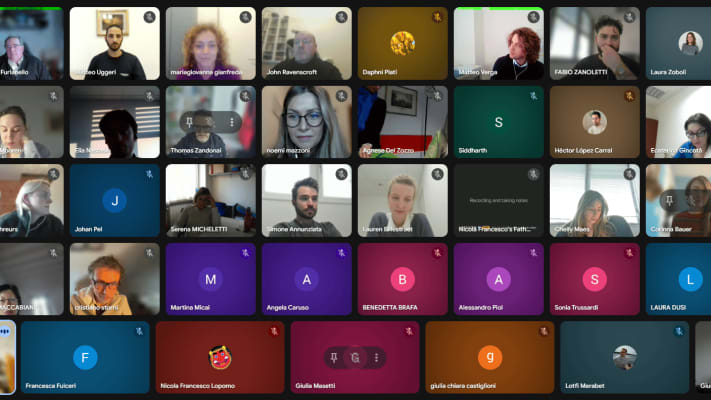
On 21 January 2026, the VIPPSTAR Consortium met online for its semestral Consortium Meeting, bringing together representatives of all partner organisations alongside the Project Officer from the European Health and Digital Executive Agency (HaDEA). The meeting marked a key moment in the project’s progression.
Discussions focused on the results of the first project year, which was dedicated primarily to preparatory work and technical and regulatory prerequisites, as well as on the project’s future directions as it moves into the next phase of clinical trials. Clinical, technical, ethical and regulatory perspectives were brought together, with particular attention paid to the conditions required to support the transition towards implementation.
A New Scientific Coordination
During the meeting, the consortium officially welcomed Jessica Galli as the new Scientific Project Coordinator, succeeding Prof. Elisa Fazzi, who continues to support VIPPSTAR as a member of the Advisory Board.
Advancements Across Clinical, Technical, Regulatory and Co-Design Activities
The meeting highlighted substantial progress across the project’s core scientific and technical areas.
Key developments included:
- the presentation of initial mock-ups of the digital platform, featuring dedicated interfaces for clinicians and patients developed through iterative feedback;
- the conclusion of the first co-design phase for the VIPPSTAR avatar, based on interviews with children, parents and experts, which identified autonomy, discretion and respect for users’ independence as central themes;
- the development of a MOOC demo addressing child development, challenges related to visual impairment, and intervention strategies;
- physical activity study: validation of monitoring protocols and technologies to assess movement and physiological data during home- and gym-based exercises, supporting further algorithm development and future testing with visually impaired children;
- progress on gaze analysis and anonymisation, enabling the ethical use of video data while preserving clinically relevant information;
- the presentation of current work on the Food Reader, an image-based system estimating energy intake and macronutrients from food images, together with its next steps, including the creation of a shared image database and app integration;
- insights from focus groups on body image and social media, highlighting autonomy and gender-related differences among adolescents with visual impairments;
- focus group interviews with children aimed at the re-design of serious games, with particular attention to long-term engagement, social interaction and motivational reward systems.
At the same time, ethical approvals across participating sites are nearing completion, paving the way for the next implementation steps.
Integrating Regulation Through a Sandbox Approach
A dedicated part of the discussion focused on the VIPPSTAR regulatory sandbox, conceived as a framework that integrates regulatory considerations into system design and clinical workflows from the outset. Rather than treating regulation as a final constraint, the sandbox leverages compliance requirements to support trial design, operational workflows, and a structured pathway towards certification and long-term scalability.
In practical terms, the sandbox operates through a structured combination of regulatory analysis, risk management, and the translation of regulatory requirements into concrete clinical and technical workflows. This includes mapping relevant frameworks for medical devices, data protection and artificial intelligence; assessing risks linked to vulnerable users and sensitive data; and embedding these considerations into tele-rehabilitation and data-sharing processes. The main output of this work will be an operational manual, iteratively refined throughout the project to guide technical decisions and support certification readiness.
Preparing the VIPPSTAR-NET Registry
Progress was also reported on the harmonisation of definitions of paediatric visual impairment in alignment with WHO standards, alongside the finalisation of ICD-10 registry fields. The planned registry will collect key information while ensuring appropriate data governance and pseudonymisation.
Looking Ahead
After a first year dedicated to building solid foundations, with strong advancements in ethical approvals, co-design processes and core technical development, VIPPSTAR is now entering a more operational phase. Attention is increasingly focused on translating research insights and technological innovation into tools and approaches that can be tested in real-world settings.
The next project phase will focus on the preparation of clinical trials, participant recruitment, the definition of measurable indicators related to child and adolescent empowerment and well-being, and strong stakeholder involvement.
The consortium will meet next on 11–12 May 2026 in Rovereto (Italy). In the meantime, work will continue on system integration, algorithm development, ethical approvals, and clinical trial preparation.